VIBE FIELD NOTES · SEPTEMBER 23, 2026
Does a ring in a phone-case photo mean MagSafe compatibility?
No. A circular ring that appears in a product photo does not, by itself, prove MagSafe compatibility, magnetic strength or wireless-charging performance. Use the image to evaluate the visible artwork. Use an explicit written specification or a confirmed answer from support to evaluate a functional feature.
This distinction matters because a photo can show a circle without explaining what it is made from, whether magnets are present, how those magnets are arranged or whether the photographed sample matches every phone-model option. A familiar shape may suggest a feature, but suggestion is not a specification. The current VIBE IN CASE catalog lists the product, artwork, phone model, edge color, price and availability for the examples below. It does not currently publish a MagSafe specification for them, so compatibility remains unverified.
What can you safely learn from the photo?
You can describe what is visibly present: the colors, repeated motifs, placement of larger shapes, border color shown in the sample and whether a circular element appears in the composition. Those observations help with a style decision. They do not establish magnet type, charging alignment, charging speed, accessory grip or certification.
There is another limit: a catalog image may show one camera layout while the product selector offers several phone models. Camera openings and proportions change across devices. Treat the photo as an artwork reference, then use the exact phone-model and color selection on the product page as the source for the SKU you are preparing to buy.
Example one: a pale ring within a botanical design.
The catalog image for Soft Blue Botanicals visibly shows fine pale-blue flowers, a light background and a pale circular ring. That is enough to decide whether you like the quiet floral look and whether the circle suits the composition. It is not enough to say the case contains magnets or will work with a particular charger or wallet.
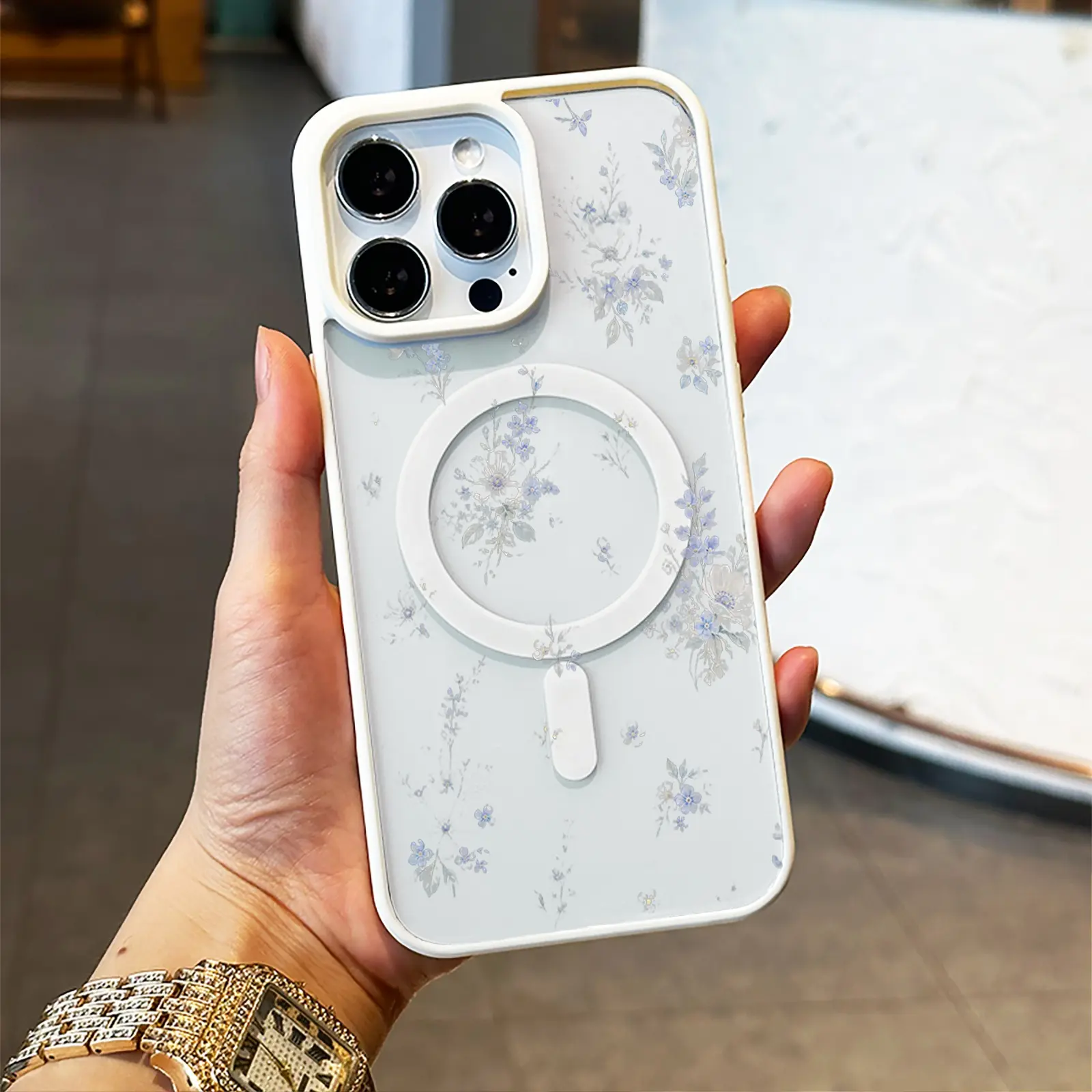
The linked example opens the verified iPhone 17 Pro Max / White option at $15.00 USD. The complete model, White color label, price and current availability come from the product data and selector. The visible ring does not add an unlisted functional promise to that SKU.
If the floral artwork is your main reason for choosing this case, you can still make a grounded purchase decision: verify the exact model, review the selected color in your bag and compare the picture with the other designs you are considering. If magnetic attachment or wireless charging is essential, pause before checkout and ask support to confirm the exact product and SKU in writing.
Example two: a dark ring among repeated bows.
The catalog image for Red & Blue Ribbons shows repeated blue gingham-style bows around a dark circular ring. The ring is more visually prominent than the pale ring in the botanical example, but stronger visual contrast is not evidence of stronger magnets—or evidence that magnets exist at all.
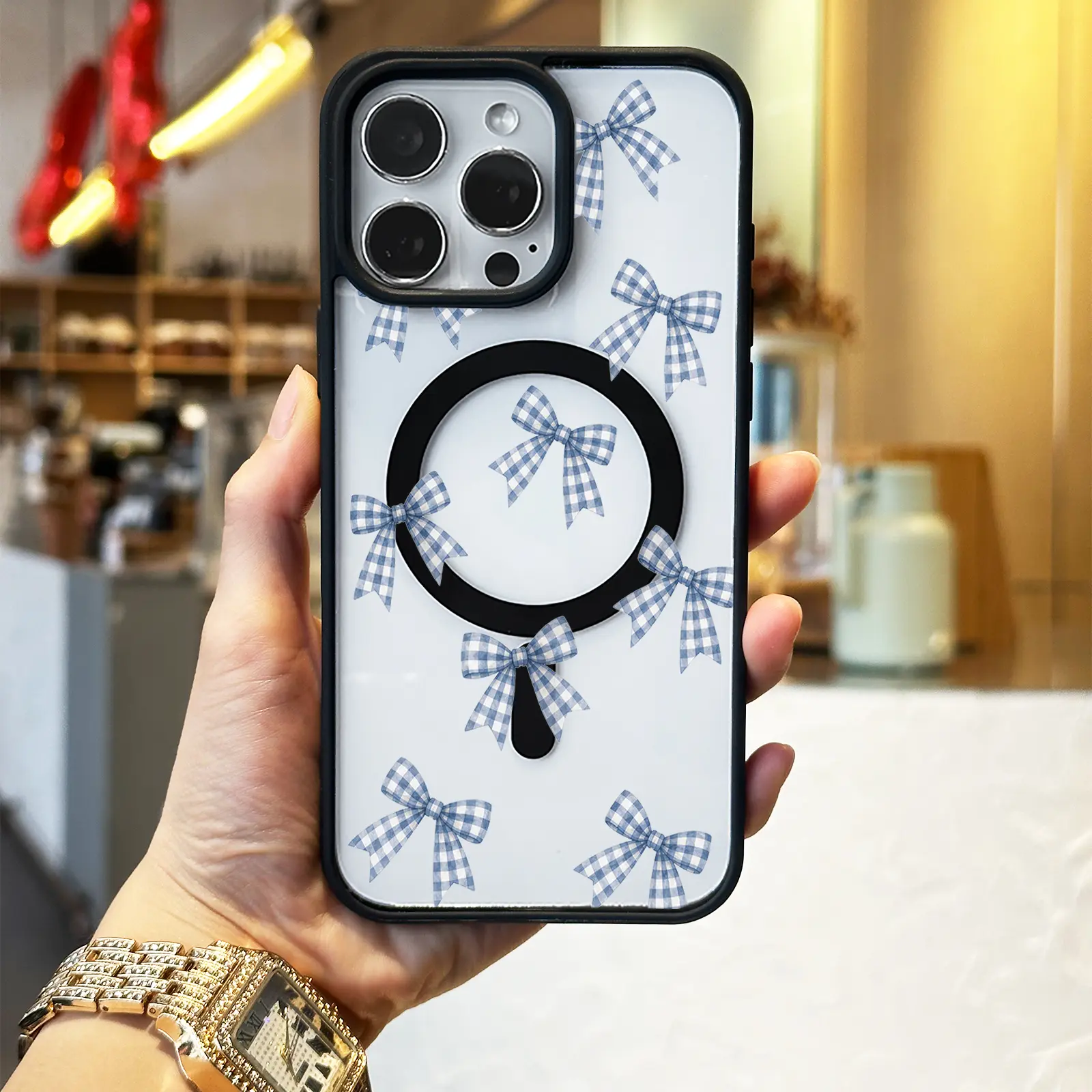
The linked example opens the verified iPhone 17 Pro Max / Black option at $15.00 USD. Here, too, the reliable catalog facts are the exact model, Black color label, price and current availability. The photo supports a visual comparison between a high-contrast circle and a softer one; it does not support a performance comparison.
This is a useful rule for any marketplace image: the clearer a symbol looks, the easier it is to assume you already know what it means. Slow down and look for a written feature field, model-specific compatibility statement or support confirmation. If none is present, keep the feature status as unknown.
Use a five-part check before buying.
1. Read the full device name. Check Settings rather than guessing from the camera count. iPhone 17, iPhone 17 Pro and iPhone 17 Pro Max are different case selections.
2. Open the exact SKU. A product name can cover many model and color combinations. Use a variant link, then confirm the same model and color in your bag before paying.
3. Separate visible design from hidden function. Flowers, bows, colors and a printed or visible circle can be assessed from a photograph. Magnet presence, magnetic strength, charging behavior, material and drop performance require specifications or testing that a photograph cannot provide.
4. Ask a narrow question. Instead of asking whether the case is “good for charging,” send the product name, phone model and color and ask whether that exact SKU is confirmed compatible with the MagSafe accessory you plan to use. A narrow question is easier to answer without mixing products.
5. Keep the answer with the purchase decision. If support confirms a functional feature, retain that written response and recheck that your bag still shows the same model and color. If the answer is unavailable, decide whether you are comfortable buying for the artwork alone.
What if the ring is only part of the artwork?
That is one possible explanation, but it should not be assumed either. The practical conclusion is the same: the image alone cannot settle the feature question. Avoid converting uncertainty into either a positive claim (“it definitely has MagSafe”) or a negative claim (“it is definitely decorative”). Both require evidence the current catalog does not provide.
The product selector and bag can confirm the merchandise identity. They cannot automatically supply a missing compatibility statement. This is why exact SKU verification and feature verification are separate steps.
The shortest buying answer.
Choose between these cases by the artwork you can actually see: quiet pale botanicals or repeated blue bows with a stronger dark circle. Choose the correct case by the exact phone model and color in the selector. Treat MagSafe compatibility as unverified until an explicit specification or model-specific support confirmation says otherwise.
For help with model and camera-layout selection, read the pattern-and-fit guide. If your question is about the edge rather than the ring, use the edge-color guide. You can also contact VIBE IN CASE support before checkout when a functional feature is essential.